Amazon Associates disclosure: As an Amazon Associate I earn from qualifying purchases. Every “Shop on Amazon” button and product link in this guide is a paid link. It costs you nothing extra, and it helps keep these guides free. Read the affiliate disclosure.
Horses standing in water? Their feet need help now.
Days in floodwater soften hooves and invite thrush, white line disease and abscesses. Below is what to watch for, what to do each day, and the hoof care products to have on hand, each with a Shop on Amazon button.
Jump to the shopping checklist See Amazon’s Cyber Week deals
The St. Johns River flood has left horses along Florida’s east coast standing in water for days, and the river is expected to stay high for weeks (NWS Melbourne). Even horses that were evacuated came off pastures that were knee deep. Once the water goes down, the next problem shows up in the feet. Florida Equine Disaster Response warned this week that prolonged exposure to floodwater can cause skin and hoof problems, according to Central Florida Public Media. Here is how to spot trouble early and what to keep on hand.
Why floodwater is so hard on hooves
A healthy hoof is tough because it holds a fairly steady amount of moisture. Standing in water for days changes that. The sole and frog soften, the hoof wall swells, and nail holes and small cracks open up. Wet, dirty conditions are where the bacteria and fungi behind thrush and white line disease do best. Then, when pastures dry and horses go back on hard ground, softened soles bruise easily, and walls that swelled and shrank start to crack and crumble. That wet-then-dry cycle is a big reason Florida owners see more hoof trouble after storms.
Thrush: the black, smelly frog
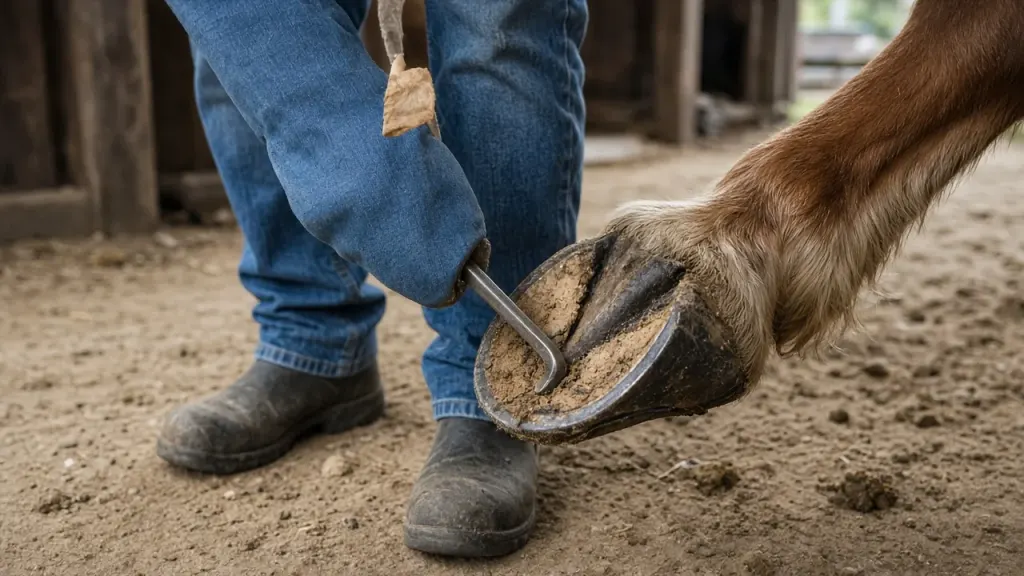
Thrush is an infection of the frog, usually in the grooves on either side of it and in the center groove. Signs are a black, tarry discharge, a strong rotten smell when you pick the foot, and a frog that looks ragged or feels soft. Most thrush is caught early and handled with daily cleaning and a thrush product. Deep thrush that reaches sensitive tissue can make a horse sore, and that is a farrier and vet problem.
What to do each day: pick out every foot, brush out the frog grooves, let the foot dry as much as you can, and apply a thrush treatment into the grooves. A dry place to stand for part of the day, such as a stall bedded deep with shavings or a gravel pad, helps more than any bottle.
1. Wahl Professional Equine Hoof Pick
Why it helps: Every treatment on this page starts with a clean foot. Picking out the feet at least once a day is the single best thing you can do for wet hooves.
Buying tip: Keep one in every grooming box, the trailer and your truck. They walk off.
2. Absorbine Hooflex Thrush Remedy (12 oz)
Why it helps: A labeled thrush treatment with an applicator tip that reaches into the grooves beside the frog, which is where thrush lives. Absorbine labels it for thrush and white line disease.
Buying tip: Pick and clean the hoof first, apply to a dry foot when you can, and follow the label. Keep it off the skin above the hoof.
3. Four Oaks Farm No Thrush Dry Powder
Why it helps: A powder is handy when the feet will not stay dry, because you can puff it into the frog grooves without adding more liquid to a soggy hoof.
Buying tip: Use it daily during wet spells as part of picking out the feet. It is not a substitute for trimming away diseased tissue, which is your farrier’s job.
4. Four Oaks Farm Thrush Solution
Why it helps: A liquid option from the same maker for deeper frog grooves that a powder does not reach well.
Buying tip: Ask your farrier which product they want you to use between visits, so you are not mixing treatments.
For more on thrush in Florida conditions, see our earlier guide, Thrush treatment and hoof care for horses in Florida.
“Dry rot” and white line disease
“Dry rot” is not a veterinary term, but owners use it for two things: shelly, crumbling hoof walls that will not hold a shoe, and a hollow, powdery separation along the white line. The second one is usually white line disease, sometimes called seedy toe. It is an infection that works its way up between the layers of the hoof wall, often starting at a crack or a stretched white line. You may see a chalky gap when the farrier trims, or hear a hollow sound when the wall is tapped.
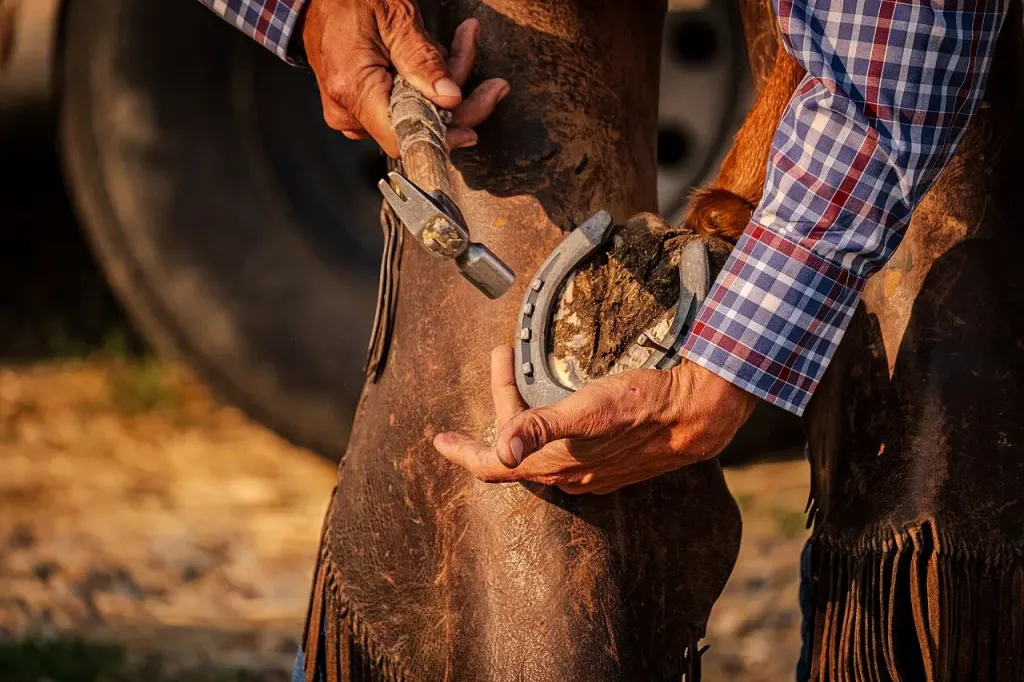
White line disease is a farrier job first. The usual approach is to trim or open up the damaged wall so air can reach it, then keep it clean and dry while it grows out. Topical products help between visits, but they do not fix it alone. For shelly, crumbling walls without infection, the farrier may suggest a hoof hardener on the lower wall and a regular trim schedule. Sole dressings can help toughen soles that went soft in the water.
5. Keratex Hoof Hardener (250 ml)
Why it helps: Wet-dry cycles are hard on the hoof wall, and many owners call the result “dry rot”: shelly, crumbling walls that lose nails. A hardener applied to the lower wall is a common way to help the wall hold together.
Buying tip: Apply only to the lower part of the wall as directed, and give it time to work. Overuse can make the wall too hard.
6. Durasole Hoof Dressing
Why it helps: A sole and frog dressing meant to toughen thin, soft soles. Soles that have been waterlogged for days are prone to bruising once horses go back to hard or rocky ground.
Buying tip: A little goes a long way; use only on the bottom of the foot and follow the directions. Ask your farrier first if your horse has very thin soles or an active abscess.
Hoof abscesses: sudden, severe lameness
Abscesses are one of the most common problems after a flood, because softened soles and opened cracks let bacteria in. The classic sign is a horse that was fine yesterday and today will barely put weight on one foot. You may feel heat in the foot and a stronger pulse at the back of the pastern. It can look like a broken leg, so do not guess. Call your vet. A vet or farrier can find the abscess with hoof testers, open it so it drains, and tell you how to care for it. Your vet will also want to know when your horse last had a tetanus vaccine, since punctures in dirty water carry that risk.
Once an abscess is opened, the usual home care is to keep it clean and covered while it drains: a poultice pad or soak under your vet’s direction, held in place with a soaking boot or a wrap. Change it as often as your vet says, and keep the horse in a clean, dry stall.
7. 3M Animalintex Hoof Poultice Pads (3 pack)
Why it helps: Pre-cut hoof pads that many vets suggest for drawing a hoof abscess once it has been found and opened. They fit inside a soaking boot or under a wrap.
Buying tip: Use them under your vet’s direction. If you poultice for days, ask your vet when to stop, because too much moisture can soften the sole.
8. Tubbease Hoof Soaking Boot
Why it helps: Holds a poultice, dressing or soak against the foot so you are not rebuilding a duct tape boot every day.
Buying tip: Measure the widest part of the sole and size up from there. It is made for short-term use in a stall, not for turnout.
9. 3M Vetrap Bandaging Tape (4 in x 5 yd)
Why it helps: Holds a poultice pad or hoof pack in place. A hoof wrap needs a lot of it.
Buying tip: Keep wrap below the coronary band unless your vet shows you otherwise, and check the wrap at least twice a day.
When to call the vet or the farrier
- Call the vet right away for sudden severe lameness, a puncture in the sole or near the coronary band, heat and swelling that runs up the leg, a fever, or any horse that will not move.
- Call the farrier for lost shoes, cracks that are spreading, a chalky or hollow white line, thrush that is not improving after a week of daily care, or a horse that is overdue for a trim. Flood-soaked feet often need a trim sooner than usual.
- Call both if you are not sure. They would rather hear from you early.
Getting horses out of the water in the first place is the best hoof care there is. If you are still planning your move, read our Florida flooding emergency plan for horses. For skin problems on the legs, including scratches, see rain sheets, turnout blankets and rain rot.
Wet-hoof care checklist (with shopping links)
- Hoof pick for daily cleaning: Wahl hoof pick (paid link)
- Thrush treatment (liquid): Hooflex Thrush Remedy (paid link)
- Thrush treatment (dry powder for soggy feet): No Thrush dry powder (paid link)
- Second thrush option your farrier prefers: Four Oaks Thrush Solution (paid link)
- Sole dressing for soft soles: Durasole (paid link)
- Hoof wall hardener: Keratex Hoof Hardener (paid link)
- Hoof poultice pads, for your vet’s abscess plan: Animalintex hoof poultice pads (paid link)
- Hoof soaking boot: Tubbease hoof soaking boot (paid link)
- Bandaging wrap: 3M Vetrap (paid link)
- A dry standing area: a stall with deep shavings, a gravel pad or a mat
- Farrier and vet numbers, and a date for the next trim
Do not wait for the next band of rain.
It is Cyber Week, and if your horses have been standing in water, a few hoof care basics now can save a vet bill later. Start with the basics: Wahl hoof pick, Hooflex Thrush Remedy, Animalintex hoof poultice pads, Tubbease hoof soaking boot. Check today’s price, size and delivery time on Amazon before you buy, since flood-area deliveries can run late.
This guide is general information, not veterinary advice, and the products here are not a substitute for a farrier or veterinarian. Read and follow every product label, and call your vet about any lameness.