Amazon Associates disclosure: As an Amazon Associate I earn from qualifying purchases. Every “Shop on Amazon” button and product link in this guide is a paid link. It costs you nothing extra, and it helps keep these guides free. Read the affiliate disclosure.
Flood emergency? Get your horse kit together today.
The St. Johns River is at or near record flood levels, and more rain will keep it high for weeks. If your horses are on low ground anywhere along Florida’s east coast or the river, build your evacuation kit now. Everything below has a Shop on Amazon button.
Jump to the shopping checklist See Amazon’s Cyber Week deals
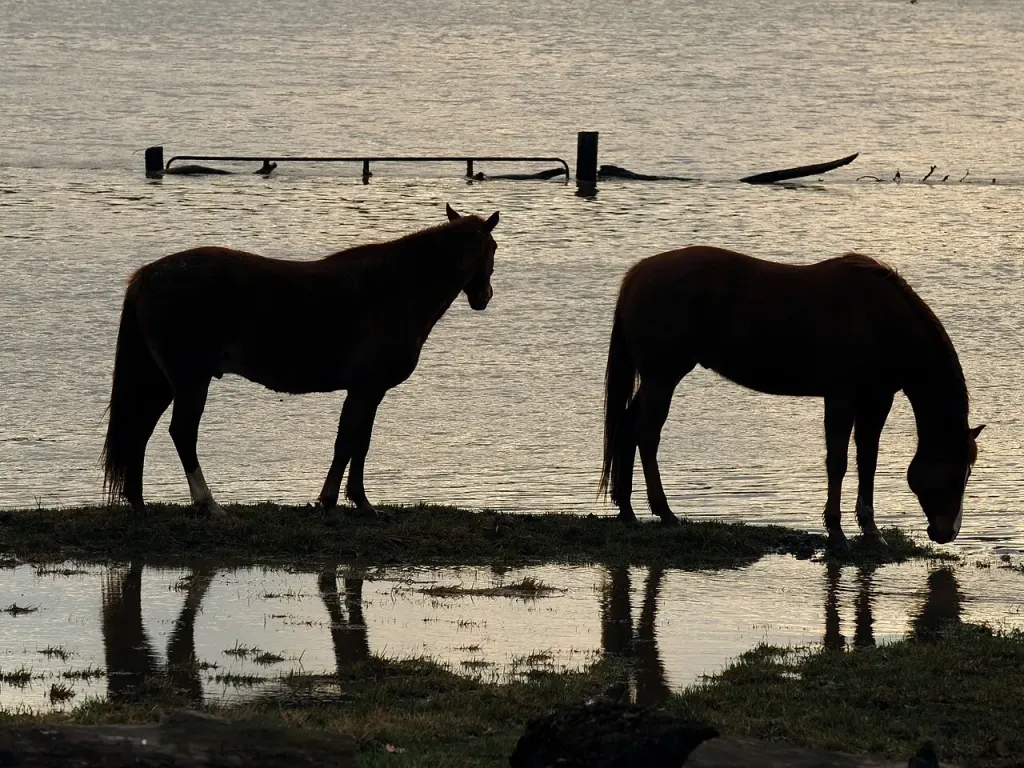
Horse owners from Brevard to Volusia County have spent the past week moving horses out of flooded barns. In Cocoa, volunteers helped evacuate about 25 horses from Blue Lake Equestrian when water rose to the horses’ bellies, and Harmony Farms in Rockledge moved its 13 therapy horses off the property ahead of the latest rain, according to Central Florida Public Media. This guide covers what to do right now: how to get horses out safely, how to make sure they can be identified, what to pack, and where to ask for help.
What is happening with the flooding
As of the National Weather Service Melbourne flood statement issued at 8:23 PM EST on Saturday, November 21, 2026, the St. Johns River near Cocoa was at 18.8 feet, in major flood stage and well above its previous record. The Weather Service expects the river to stay near that level into the middle of next week, with only a slow decline possible late in the week (NWS Melbourne flood statement). Upriver levels are just as serious: the river above Lake Harney was forecast to crest at a record 13 feet on Sunday, November 22, and Sanford and DeLand were forecast to reach major flood stage by midweek, according to the St. Johns River Water Management District figures reported by WESH.
The part that matters most for horse owners is time. The water management district expects the river near Cocoa to stay at or above moderate flood stage for two to three months. Pastures that drain slowly, flooded barn aisles and soaked hay will be a problem long after the rain stops. That means this is not a one-night evacuation for many barns. Plan for horses to be away from home for weeks.
Step 1: Decide early, and move horses before the roads close
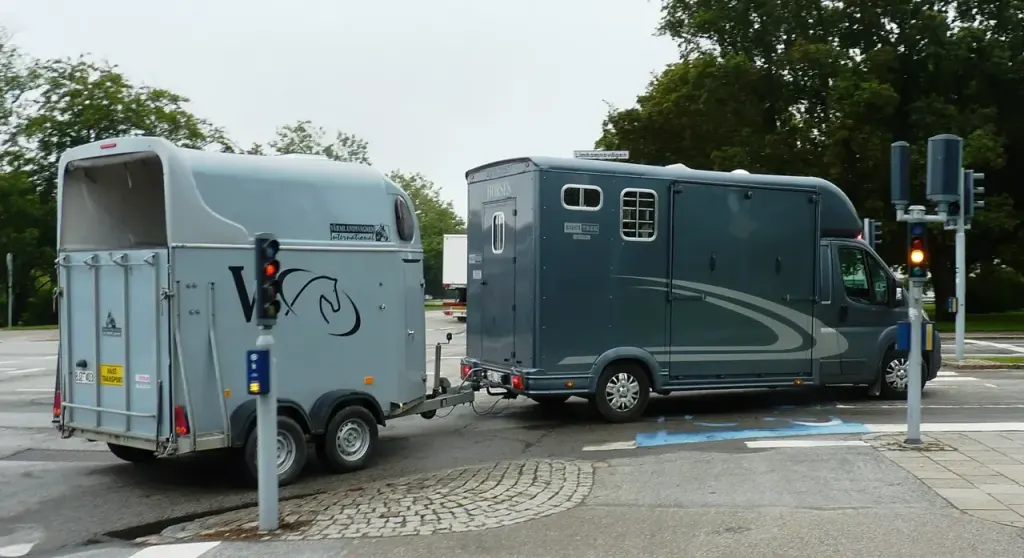
The most common mistake in a flood is waiting. Horses need a truck, a trailer, a driver and a dry place to go, and every one of those gets harder to find once neighbors are flooding too. If your pasture or barn is already holding water, or the forecast puts more rain on top of a high river, move horses while the roads are still open. Never drive a truck and trailer through moving or standing water on the road. The Weather Service reminder applies twice over with a loaded trailer: turn around, don’t drown.
Line up two destinations before you need them: a friend’s farm or a boarding barn on high ground, and a backup farther away. Call ahead and confirm they have room. Ask what they require. Most barns will want a current negative Coggins test and vaccination records, and many will ask that horses arrive with their own feed.
If you do not own a trailer, or you have more horses than spaces, ask for help now rather than later. During this flood, the nonprofit Florida Equine Disaster Response has been helping coordinate dozens of evacuations, connecting owners with trailers and dry stalls, according to Central Florida Public Media. Local riding clubs and boarding barns have also been hauling for neighbors.
Step 2: Make sure every horse can be identified
Horses that get loose in a flood or end up at a crowded evacuation barn are hard to sort out without ID. Do all three of these:
- A breakaway halter with your contact information. Leather crowns or breakaway tabs reduce the risk of a horse getting hung up on debris.
- Your phone number on the horse. A livestock marker on both sides of the barrel works. Some owners also braid a luggage tag into the mane.
- Papers and photos. Take clear photos of each horse from both sides and the face, plus close-ups of markings, brands or tattoos. Keep a copy of the Coggins, vaccination records and proof of ownership with the horses and on your phone.
1. I.C.E. In Case of Emergency Breakaway Halter
Why it helps: It comes with an emergency contact form that rides on the halter, so a horse that gets loose or lands at a strange barn carries your name and phone number. The breakaway crown matters in a flood, when a halter can snag on fencing or debris.
Buying tip: Fill in the contact card with a waterproof pen before the storm, and add a second number outside the flood area. Pick the size from the maker’s chart, not by guess.
2. LA-CO All-Weather Twiststik Livestock Marker
Why it helps: Writing your phone number on your horse’s side is the fastest backup ID there is, and responders in Florida floods have asked owners to do exactly that. This marker is made for livestock and is listed as working on wet or dry hair.
Buying tip: Write large and on both sides of the barrel. Bright colors show up best on dark coats. Test a small patch first on a sensitive horse.
3. FunOwlet Fireproof and Waterproof Document Bag (15 x 11 in)
Why it helps: Coggins papers, vaccination records, ownership papers and photos of each horse need to travel with the horses and stay dry. A zip bag that fits letter-size papers keeps the whole folder together in the truck.
Buying tip: Put copies, not your only originals, in the bag, and keep the same files as photos on your phone and in a cloud folder.
Step 3: Get the trailer and truck ready
A trailer that has sat in a wet field may not be road-ready. Before the next band of rain, check the tire pressure and tread on the trailer and its spare, test the brake and turn lights, and stomp on the floor boards or mats to find any soft spots. Grease the hitch, check the safety chains and breakaway battery, and keep the truck’s tank full. Practice loading any horse that is not a reliable loader while the weather is dry, because a frightened horse in the dark is much harder to load.
Step 4: Water, hay and feed for at least a week
Plan for at least seven days of water, hay and feed per horse. Keep hay and grain off the floor and covered, since wet hay can mold and moldy feed is a colic and health risk. Bring your horse’s usual hay and feed so the diet does not change suddenly during the move. Floodwater can carry sewage, chemicals and debris, so horses should not drink it. A horse drinks 5 to 10 gallons a day at rest, more in heat, so store clean water in containers and bring buckets that belong to your horse.
4. Reliance Aqua-Tainer 7 Gallon Rigid Water Container
Why it helps: Floodwater is not drinking water, and power outages stop well pumps. A horse can drink 5 to 10 gallons a day at rest, more in heat, so stored clean water is the first thing to run short.
Buying tip: Plan on at least a few days of water per horse, fill containers before the next round of rain, and label them for horses only.
5. Little Giant Flat Back Bucket (20 quart)
Why it helps: Wherever your horse ends up, it needs its own water and feed buckets. Shared buckets at a crowded evacuation barn spread illness.
Buying tip: Write your horse’s name and your phone number on each bucket with the livestock marker or a paint pen.
6. Weaver Equine Slow Feed Hay Bag
Why it helps: Hay keeps the gut moving and the horse calmer during a long haul or in a strange stall. A bag that hangs in the trailer keeps hay off a wet floor.
Buying tip: Pack one bag per horse and a few days of your own hay in sealed bags or bins. A sudden feed change during a stressful move is a colic risk.
7. Farnam Apple Elite Electrolytes
Why it helps: Stressed horses sometimes drink less in a new place. Ask your vet whether an electrolyte belongs in your plan, and if so, have it in the kit ahead of time.
Buying tip: Always offer plain water alongside any electrolyte, and follow the label and your vet’s advice.
Step 5: Pack a first-aid kit, and call the vet when it is more than first aid
Expect cuts from fencing and debris, swollen legs, and hoof problems after horses stand in water. A first-aid kit should hold gauze, non-stick pads, bandaging wrap, a thermometer, a hoof pick, antiseptic wash, scissors, and any medication your vet has prescribed. Write your vet’s number on the lid. A kit is for holding things together until help arrives. Call your veterinarian for any deep wound, a puncture near a joint or the hoof, colic signs, a fever, a horse that will not eat or drink, or a horse that has been standing in cold water for a long time. Prolonged exposure to floodwater can cause skin and hoof problems, and in some cases hypothermia, as Florida Equine Disaster Response warned this week.
8. Equine Triage Kit (36 piece)
Why it helps: Wire cuts, punctures and swollen legs are common after horses stand in floodwater or get moved in a hurry. A ready-made kit means gauze, wraps and basic tools are in one bag when the vet may be hours away.
Buying tip: Add your vet’s instructions, any prescriptions your horse needs, and a digital thermometer if the kit you get does not include one. Keep it in the truck, not the barn.
9. 3M Vetrap Bandaging Tape (4 in x 5 yd)
Why it helps: Self-adhering wrap holds a dressing, a poultice or a hoof pack in place without tape sticking to hair. You will go through more than you expect during an evacuation.
Buying tip: Buy several rolls. Never wrap a leg tightly without padding underneath; ask your vet to show you safe tension if you have not done it before.
10. Klarus HM1 Rechargeable Headlamp (IPX6)
Why it helps: Evacuations happen in the dark and in the rain. A waterproof headlamp leaves both hands free for a lead rope and a trailer door.
Buying tip: Charge it now and keep a cable in the truck. Pack a second light for whoever is helping you load.
For hoof problems after the water goes down, read our guide to wet hooves, thrush, “dry rot” and abscesses. For skin problems like rain rot, see rain sheets, turnout blankets and rain rot.
Where to get help
- Life-threatening emergencies: call 911.
- Your county emergency management office: Brevard, Seminole, Volusia, Lake and the other river counties post road closures, shelter information and sandbag sites. Sign up for your county’s alerts.
- Florida Department of Agriculture and Consumer Services (FDACS): FDACS leads the state’s animal and agriculture emergency response through the State Agricultural Response Team. Its animal and feed assistance line is 1-833-264-6250; Martin County currently lists that number for flood feed assistance for eligible producers (Martin County recovery page).
- Your veterinarian and farrier: call before you need them. Some practices along the river have had to evacuate too.
- Florida Equine Disaster Response: a volunteer nonprofit that has been coordinating horse evacuations during this flood.
Horse flood emergency checklist (with shopping links)
- Breakaway halter with your contact info on every horse: I.C.E. breakaway halter (paid link)
- Livestock marker for your phone number on the horse: All-Weather Twiststik livestock marker (paid link)
- Coggins, vaccine records and photos in a waterproof bag: waterproof document bag (paid link)
- Equine first-aid kit: Equine Triage Kit (paid link)
- Bandaging wrap: 3M Vetrap (paid link)
- Clean water containers: Reliance Aqua-Tainer 7 gallon (paid link)
- One bucket per horse, labeled: Little Giant flat back bucket (paid link)
- Hay bag and several days of your own hay: Weaver slow feed hay bag (paid link)
- Electrolytes, if your vet recommends them: Farnam Apple Elite electrolytes (paid link)
- Waterproof headlamp: Klarus HM1 headlamp (paid link)
- Trailer checked: tires, floor, lights, hitch and truck fuel
- A confirmed place to go on high ground, plus a second choice
- Your vet, farrier and county emergency management numbers saved in your phone
Do not wait for the next band of rain.
Cyber Week sales are on, and horse owners on the east coast need this gear now, not after the next storm. Start with the basics: I.C.E. breakaway halter, All-Weather Twiststik livestock marker, Equine Triage Kit, Reliance Aqua-Tainer 7 gallon. Check today’s price, size and delivery time on Amazon before you buy, since flood-area deliveries can run late.
This guide is general information, not veterinary advice. Your veterinarian knows your horse; call them with any health question. Flood levels change quickly, so check the National Weather Service and your county emergency management office for current conditions.