Affiliate note: This post links to products on Amazon. Each of those links is marked “(paid link).” As an Amazon Associate I earn from qualifying purchases, so if you buy through one of these links I may earn a commission at no extra cost to you. These picks are not Ocala Horse Supply shop stock. How affiliate links work here.
Thrush treatment for horses starts with a clean, dry hoof. If you have ever picked out a hoof and been hit with a sour, rotten smell, you have probably met thrush. Horses in Marion County spend a lot of time on sandy soil that can turn wet and packed in the rainy season, and that mix is hard on the frog. This guide covers how to spot thrush, how to treat it, which products we use and the daily habits that keep it from coming back.
For the rest of our barn kit, see our Amazon horse supply picks for Ocala barns.
What is thrush in horses?
Thrush is a bacterial infection of the frog, the V-shaped pad on the underside of the hoof. It tends to start in the grooves beside the frog and in the central groove, where dirt and moisture get packed in with little air.
- A black, tar-like discharge in the grooves.
- A strong, foul smell when you pick the hoof.
- A soft, crumbly or shrinking frog.
- Sensitivity when you clean the grooves. In deeper cases, lameness.
How do you treat thrush?
Mild thrush usually clears with daily cleaning, a dry place to stand and a thrush product worked into the grooves beside and down the middle of the frog. UF/IFAS Extension lists a clean environment, exercise and a farrier trim to remove soft horn as the base of treatment. Deep or painful cases need your farrier or vet.
Step 1: Clean the hoof out completely
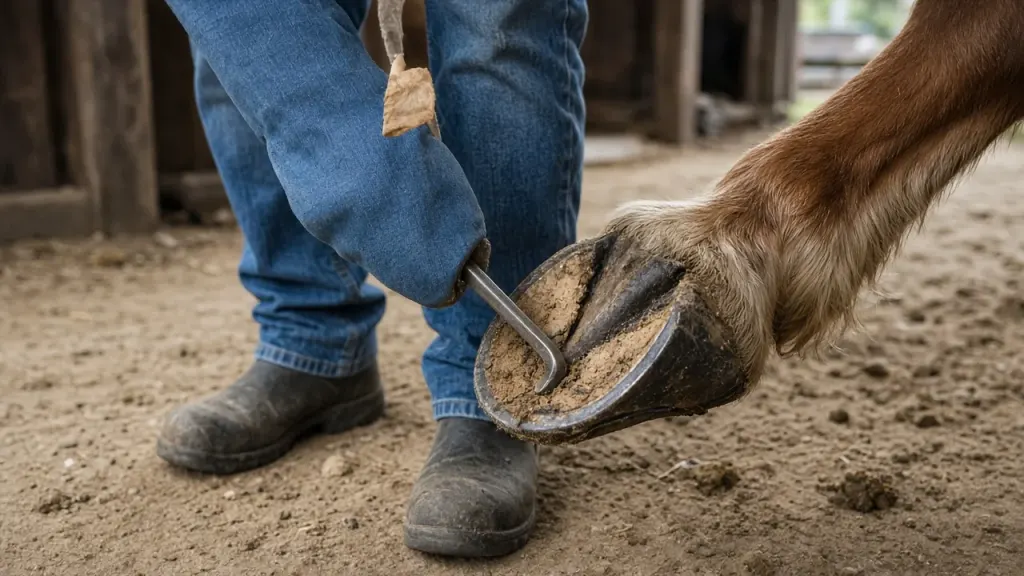
Pick out the sole and both side grooves, then brush out what is left. You cannot treat what you cannot reach.
Step 2: Dry the area
A treatment works best on a clean, dry hoof. Let the horse stand on a dry mat or clean bedding for a bit before applying.
Step 3: Apply a thrush product
Work it into the grooves as the label directs. We use a dry powder, covered below.
Step 4: Keep the environment dry
Clean, dry bedding and a dry spot in the paddock matter as much as the product. Thrush comes back fast in wet stalls.
Step 5: Repeat and recheck
Treat on the schedule the label gives and check the hoof daily. If it is not improving, call your farrier.
Thrush treatment we link to
Our thrush treatment for horses in wet Florida sand is simple: a dry powder, a good hoof pick and a dry place to stand. Here is the product we link to.
Four Oaks Farm No Thrush Dry Powder
Four Oaks Farm No Thrush Dry Powder (5.5 oz) (paid link) is a dry powder in a 5.5 oz container. A powder is handy in wet weather because you are not adding more liquid to a damp hoof. Follow the label for how to apply it and how often.
Powder or liquid thrush treatment?
Both are applied to a clean hoof. A dry powder adds no extra moisture, which can help on a hoof that is already damp from wet ground. A liquid can run down into deep, narrow grooves. Your farrier can tell you which form suits your horse’s feet, and the label tells you how often to use it.
Which hoof pick works best?
The best hoof pick is the one you will use every day, with a firm point for packed sand and a brush for the grooves. Our hoof pick with brush spotlight covers what to look for. We use the Wahl Professional Equine Hoof Pick (paid link). Keep one in each grooming tote and one by the stall door so picking never gets skipped.
Why does Florida sand cause hoof problems?
Sandy soil packs into the sole and grooves, and in the rainy season it holds water against the hoof. That keeps the frog damp and cuts off air, which suits the bacteria behind thrush. Sand can also be abrasive. Dry spells bring a different issue: hooves can dry out and crack. Regular farrier visits help you keep up with both.
Why wet pastures are hard on feet
Hoof horn absorbs moisture. When feet stay wet, the horn can soften, and when conditions dry out quickly it can lose moisture again. Standing in urine, manure, mud or wet ground is the main contributor to thrush, according to UF/IFAS Extension.
- Give horses a dry place to stand. A dry lot, a well-drained paddock or a stall with dry bedding gives feet a break during wet stretches.
- Fix low spots and gate areas that turn to mud. Gateways and water troughs are often the worst.
- Keep stalls clean and dry. See the Little Giant DuraFork spotlight for a daily stall routine.
- Plan for drainage when you buy or build. The Ocala horse farms guide suggests walking the low ground after a rain.
Daily hoof care routine
Pick out all four feet every day, and before and after every ride; Extension horse specialists call daily hoof cleaning and stall sanitation the best thrush control. It takes a few minutes:
- Pick from heel toward toe, clearing the grooves on either side of the frog and the groove down the middle.
- Brush away the remaining dirt so you can see the sole and frog.
- Look for stones, nails or anything stuck in the foot.
- Notice the smell. A black, foul-smelling discharge in the grooves is a reason to call your farrier or vet.
- Check the shoes if your horse wears them: loose nails, shifted shoes or risen clinches.
- Feel for heat in the hoof wall and notice any change in how the horse moves. Heat, a sudden change in gait or reluctance to bear weight are reasons to call your vet promptly.
- Keep a regular farrier schedule.
The same wet months that bring thrush bring skin trouble. See how to treat rain rot in horses for the coat side of rainy season care.
When to call your farrier or vet
- The horse is lame or flinches when you touch the frog.
- The infection reaches sensitive tissue or bleeds.
- There is swelling or heat in the lower leg.
- Thrush keeps coming back despite good care.
FAQ
Can thrush make a horse lame?
Yes. Untreated thrush can reach sensitive tissue and make a horse sore. Call your farrier or vet if your horse is lame.
How often should I pick hooves?
At least once a day, and before and after every ride.
Is bleach safe for thrush?
Ask your farrier before using household chemicals like bleach, which can damage healthy tissue. UF/IFAS Extension lists diluted bleach only with a caution. A product made for hooves and labeled for thrush is the simpler choice.
How long does thrush take to clear?
It depends on how deep the infection is and how dry you can keep the hoof. Mild cases often improve with steady daily care in a dry setting. Deep cases take longer and need your farrier or vet.
Building a hoof care kit? Start with our list of Ocala barn essentials. This is general barn care information, not veterinary advice. Follow the product label and ask your vet about anything that worries you.