Affiliate note: This post links to products on Amazon. Each of those links is marked “(paid link).” As an Amazon Associate I earn from qualifying purchases, so if you buy through one of these links I may earn a commission at no extra cost to you. These picks are not Ocala Horse Supply shop stock. How affiliate links work here.
Electrolytes for horses replace the salts lost in sweat, and Florida heat and humidity make horses sweat a lot. Humid air also makes it harder for sweat to cool them. Water comes first, but horses lose sodium, chloride and potassium in sweat too. This guide covers the warning signs, how we use electrolytes and what to do when a horse gets too hot.
For the rest of our summer barn kit, see our Amazon horse supply picks for Ocala barns.
Do horses need electrolytes in Florida?
Many horses in Florida benefit from electrolytes during hot months, especially if they work hard, travel or sweat heavily. A horse in light work with free access to water and salt may not need extra. Your vet can help you decide.
Sweat carries out water plus sodium, chloride and potassium. A horse needs those salts to keep drinking and to recover after work. Electrolytes replace them, but only when the horse also has plenty of clean water.
Signs of dehydration in horses
- Dull eyes and a tired attitude.
- Dry or tacky gums.
- Skin that is slow to flatten after a gentle pinch on the neck.
- Less manure, or dry manure.
- Dark urine or less urine than usual.
None of these signs alone proves dehydration. If you are worried, call your vet.
University of Minnesota Extension lists a skin tent that lasts several seconds and reduced feed intake among signs of heat stress and dehydration (UMN Extension). Tufts veterinarians add that urine may be darker and less in amount (Cummings School of Veterinary Medicine at Tufts).
Signs of heat stress and heat stroke
- Fast breathing that does not slow with rest.
- A high rectal temperature. Tufts veterinarians say concern rises above 103°F; learn your horse’s normal and keep a thermometer handy.
- Heavy sweating, or in some horses, little or no sweating.
- Weakness, stumbling or lack of interest in food.
Heat stroke is an emergency. Start cooling the horse and call your vet right away.
Electrolytes we link to
Farnam Apple Elite Electrolytes
Farnam Apple Elite Electrolytes (40 day supply) (paid link) is one option we link to: a powdered electrolyte supplement sold as a 40 day supply. It is apple flavored. Mix it into feed or water as the label directs, and if you add it to water, always offer a plain water bucket as well, as NMSU Extension also advises. See Farnam Apple Elite on Amazon (paid link).
Powder or paste electrolytes?
Powders mix into feed or water and suit daily use through the hot months. Pastes come in a dosing syringe, which makes them handy for travel, shows and horses that will not eat treated feed. Whichever you use, follow the label and keep plain water available. Your vet can help you choose.
How to cool a hot horse
- Stop work and move the horse to shade with moving air.
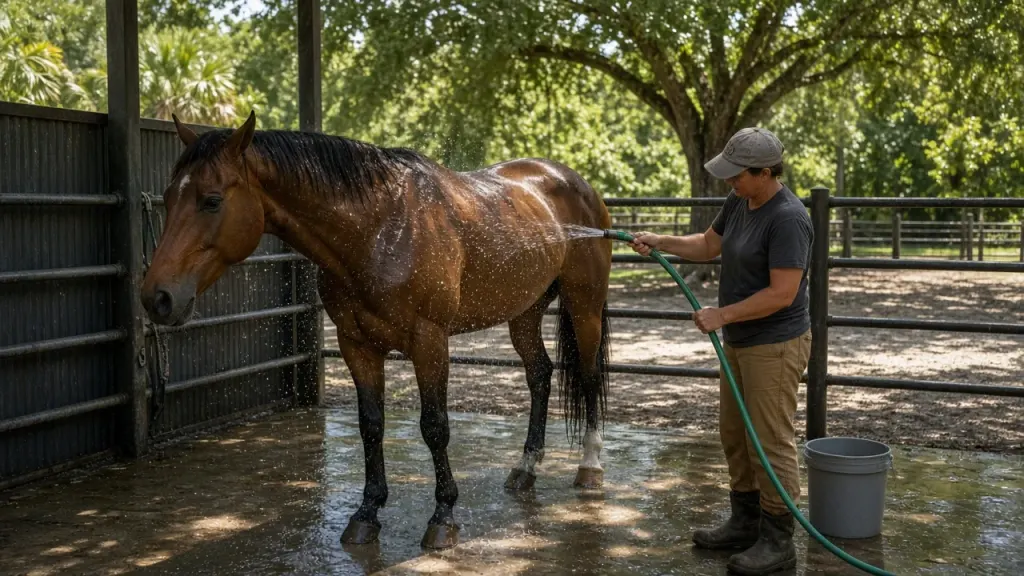
- Hose the whole body continuously with cool water. New Mexico State University Extension reports that continuous hosing over the entire body was the most effective cooling method in recent research.
- If water is limited, keep the coat wet and stand the horse in front of a fan in the shade.
- Offer cool water to drink in small, frequent amounts.
- Check temperature and breathing as you go, and call your vet if they do not improve.
Salt, water and feeding tips
- Keep clean water available at all times, and clean buckets and troughs often in summer.
- Offer a salt block or loose salt.
- Ride in the cooler parts of the day.
- Give turnout horses shade.
- Use fly control so horses are not stamping and running in the heat.
Summer means flies too. See our guide to the best fly spray for horses in Florida for the other half of hot-weather care.
When to call a vet
Call your vet if your horse stops drinking or eating, has a high temperature, stops sweating, shows colic signs or does not recover after cooling. Your vet can also tell you whether electrolytes make sense for your horse and how to use them.
FAQ
Can you give electrolytes every day?
Some horses get them daily during hot months, but it depends on the horse, the work and the product. Follow the label and ask your vet, and always pair electrolytes with plenty of fresh water.
How much water does a horse drink in summer?
It varies with size, diet, work and weather, and a horse drinks more in heat. Rather than aim for a number, learn what is normal for your horse and watch for changes. Your vet can give you guidance for your horse.
For the rest of our summer kit, see our Ocala barn essentials list. This is general barn care information, not veterinary advice. Follow the product label and ask your vet about anything that worries you.